
What Makes a Custom Home Feel Timeless, Not Trendy?
When you’re building a custom home, it’s natural to look at what’s popular right now. Inspiration photos, model homes, and design trends can help you discover what you like, but a home you’ll live in for decades needs to do more than look current on move-in day.
Timeless design doesn’t mean avoiding personality or choosing the safest option every time. It’s about knowing which decisions will have the greatest long-term impact and creating a cohesive home. Trends can still have a place, particularly in areas that are relatively easy to update as your tastes change.
At Harren Companies, we help homeowners make those distinctions throughout the custom home design and building process. By considering the architecture, property, lifestyle, and long-term goals together, you can create a home that feels personal today without relying entirely on what’s currently popular. Contact us today to start designing your timeless custom home.
Start With Architecture That Makes Sense
A timeless home begins with the architecture itself.
Rooflines, windows, exterior materials, room proportions, and other structural elements should work together, not compete for attention. When the overall design has a clear direction, the home is less dependent on decorative details to give it character.
This doesn’t require choosing a traditional architectural style. Contemporary and modern homes can age beautifully when you thoughtfully consider their proportions and materials. The goal is consistency, not incorporating every feature or style you happen to like.
Let the Property Influence the Design
A custom home has an advantage that a predetermined floor plan doesn’t. You can design it specifically for the property where it will be built.
The home’s orientation, views, natural light, trees, elevation changes, and surrounding landscape can all influence its design. A lake home might emphasize views toward the water, while a wooded property may call for a very different relationship between windows, outdoor spaces, and privacy.
Homes that respond naturally to their surroundings tend to feel more intentional. Instead of relying on a particular design trend for identity, the property itself becomes part of what makes the home distinctive.
Choose Permanent Materials Carefully
Some design decisions are relatively easy to revisit. Others are much harder and more expensive to change.
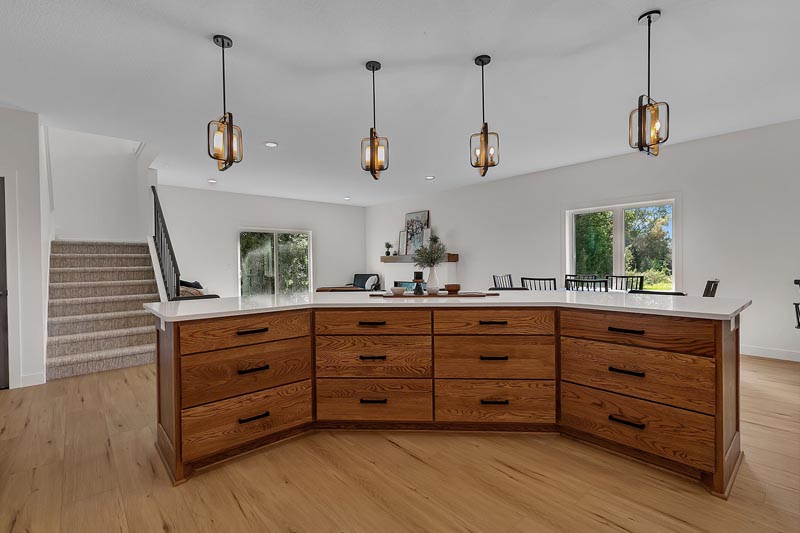
Exterior materials, flooring, cabinetry, countertops, tile, fireplaces, and other permanent features deserve careful consideration. Natural materials and finishes with depth and texture can often age more gracefully than highly specific looks tied closely to a particular moment.
That doesn’t mean every selection needs to be neutral. Color, contrast, and distinctive materials can give a custom home personality. The important question is whether you genuinely like the choice or whether you’re making it primarily because you’re seeing it everywhere right now.
Use Trends Where They’re Easier to Change
Trends aren’t inherently a problem. In fact, they can be one of the most enjoyable parts of designing a new home. The key is deciding where to use them.
Paint colors, light fixtures, furniture, hardware, and decorative elements let you incorporate current styles without making them permanent parts of the home’s architecture. If your tastes change five or ten years later, you can usually update these elements without a major renovation.
That gives you room to have fun with the design while allowing the home’s larger decisions to provide a more lasting foundation.
Prioritize Proportion Over Square Footage
Bigger rooms don’t automatically make a home feel better.
Ceiling heights, window placement, furniture layouts, sightlines, and the relationship between adjoining spaces all influence how comfortable a room feels. A well-proportioned space can feel inviting and substantial without adding unnecessary square footage.
This is particularly important in a custom home because you aren’t limited to making an existing floor plan work. You can design rooms around their purpose and how you’ll actually use them.
Good proportions may not be the first thing someone notices when walking into a home, but they’re often part of the reason the space simply feels right.
Design Around Your Life Instead of a Photograph
It’s easy to fall in love with a kitchen, great room, or primary suite you see online. The harder question is whether that space would actually work for you.
Think about how you cook, entertain, relax, work, store belongings, and move through your home. A feature that’s perfect for one household may create unnecessary space or inconvenience for another.
This is one of the biggest advantages of working with a custom home builder. Rather than starting with what a home is supposed to look like, you can start with how you want it to function and build the design around that. A home designed around your routines is much less likely to feel outdated simply because home design preferences change.
Invest in Craftsmanship Where It Matters
Trends change, but quality takes much longer to go out of style.
Well-built cabinetry, properly installed finishes, quality millwork, thoughtful transitions, and carefully executed details shape how a home looks and feels long after construction is complete.
Craftsmanship also becomes more noticeable with time. Materials and details that hold up well can help a home keep feeling cared for, rather than prematurely dated or worn.
When deciding where to invest in a custom home, durability and quality often matter more over the long term than adding another short-lived design feature.
Build a Custom Home That Still Feels Like Yours Years From Now
A timeless custom home doesn’t need to ignore trends. It simply shouldn’t depend on them. Strong architecture, thoughtful proportions, durable materials, and a design shaped around your property and lifestyle create a foundation that can remain relevant even as styles change.
Harren Companies works with homeowners to build custom homes that reflect their individual tastes while considering how those decisions will live over time. If you’re starting to plan a custom home in Minnesota and want help sorting lasting design choices from passing trends, we’d be happy to talk through your ideas.
